

Applying to a PhD program at the Massachusetts Institute of Technology (MIT) has always been a formidable endeavor. In 2025, amidst shifting funding landscapes and evolving immigration policies, the process has become even more complex. This article provides a comprehensive overview of the MIT PhD acceptance rate, as well as detailed MIT PhD admissions statistics for 2025, covering applicant profiles, MIT PhD funding in 2025, and specific challenges for international applicants—including the MIT PhD visa process.
MIT PhD Acceptance Rate: How Hard Is It to Get In?
Department-Specific Acceptance Rates
MIT’s PhD programs remain highly competitive. For those wondering how hard it is to get into MIT PhD, recent data tells a sobering story. MIT’s PhD programs remain highly competitive. For Fall 2024, self-reported data indicates an acceptance rate of approximately 23%, based on 559 applications. However, acceptance rates vary significantly across departments. For instance, the Electrical Engineering and Computer Science (EECS) PhD program reportedly received 4,444 applications in 2025, highlighting the intense competition in certain fields.
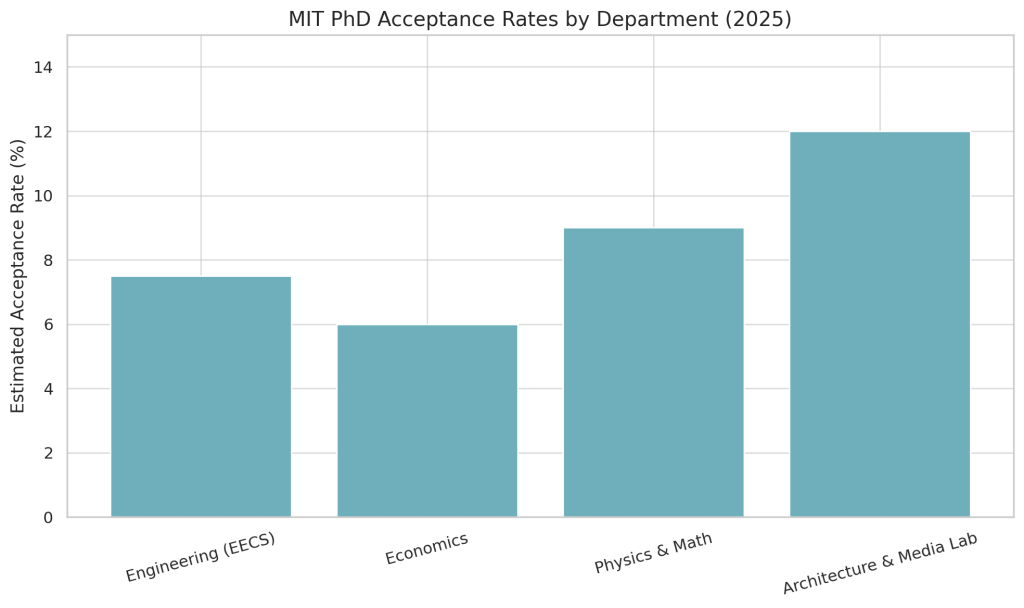
Department-specific acceptance rates further illustrate this competitiveness
- Engineering (EECS, Mechanical, AeroAstro): Approximately 6–9% acceptance rate.
- Economics: Approximately 5–7% acceptance rate.
- Physics & Mathematics: Approximately 8–10% acceptance rate.
- Architecture & Media Lab: Approximately 10–14% acceptance rate.
It’s important to note that these figures are estimates and actual acceptance rates may vary.
What MIT Looks for in PhD Applicants
GPA, Research Experience, and Letters
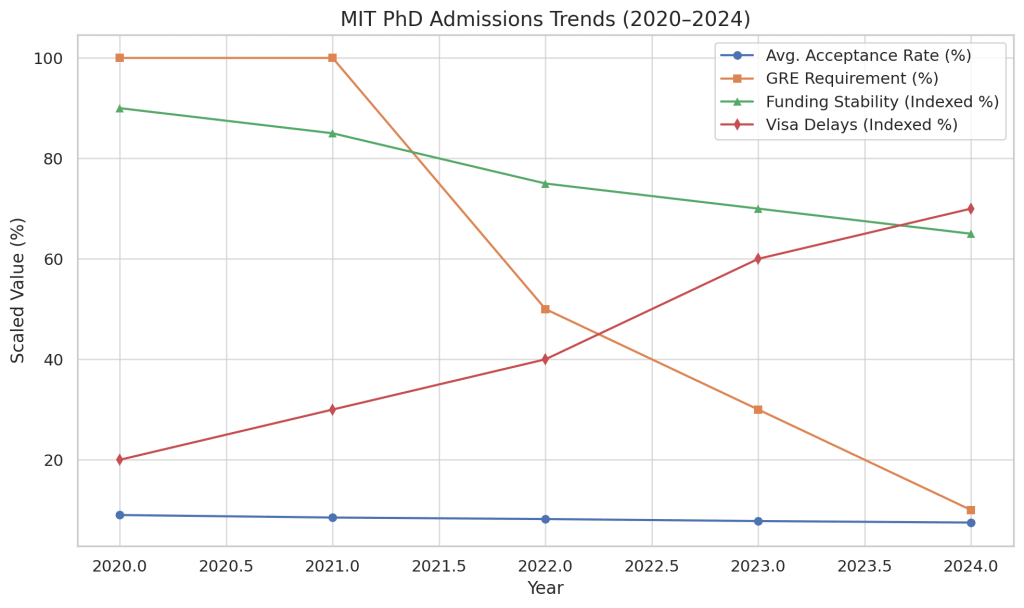
MIT seeks top academic performers, but the strongest applicants also understand how to align their experiences with program values. If you’re applying, make sure to study common MIT PhD application tips shared by successful admits. Competitive applicants typically have a GPA of 3.8 to 4.0, especially in quantitative and technical disciplines. Many MIT PhD programs have made the GRE optional or have eliminated it entirely; applicants should check specific departmental requirements. In recent years, many programs have made the MIT PhD GRE optional, but requirements vary by department.
Beyond academic metrics, MIT values applicants who demonstrate exceptional research experience, strong faculty endorsements, and a clear alignment with the institute’s mission. A compelling Statement of Purpose that articulates your research interests and how they align with MIT’s strengths can significantly enhance your application.
📅 Planning your PhD journey? Download our free 2025 PhD Application Timeline to stay on track with deadlines, application components, and essential milestones.
MIT PhD Funding and Stipend (2025)
Typical Funding Package Breakdown
MIT offers robust financial support to its PhD students. The standard MIT PhD stipend in 2025 is approximately $4,654 per month, totaling nearly $55,848 per year—plus full tuition and health insurance coverage. For the 2024–2025 academic year, the standard funding package includes:
- Tuition Coverage: Full academic year tuition.
- Stipend: Approximately $4,654 per month, totaling around $55,848 annually.
- Health Insurance: Valued at $3,603 per year.
This funding is typically guaranteed for five years for students in good academic standing. However, it’s important to note that funding can vary significantly among disciplines, and applicants should consult their specific departments for detailed information .
Want more tips? Subscribe to my YouTube channel for weekly insights!
The MIT PhD Visa Process: What to Know
If you’re applying from outside the U.S., it’s crucial to understand the MIT PhD requirements for international students, from language proficiency to financial documentation. International students are integral to MIT’s academic community, comprising over 40% of STEM PhD enrollments in the U.S.
Delays and Policy Shifts in 2025
Understanding the MIT PhD visa process is critical for avoiding costly delays. In 2025, international applicants face heightened uncertainties:
- Visa Processing Delays: Applicants from countries like India and Nigeria have experienced significant delays in securing visa interview appointments, potentially impacting enrollment timelines.
- Policy Changes: The U.S. government’s evolving immigration policies have led to increased scrutiny and potential delays in visa processing.
To mitigate these challenges, international applicants are advised to:
- Plan Ahead: Start the visa application process early and stay informed about policy changes.
- Consult Resources: Utilize MIT’s International Students Office for guidance and support.
- Prepare Documentation: Ensure all necessary financial and academic documents are in order to facilitate the visa process.
Trends in MIT PhD Admissions (2020–2025)
Several trends have emerged in MIT’s PhD admissions landscape:
- Admissions Competitiveness: MIT’s PhD programs have consistently maintained low acceptance rates, reflecting their high selectivity.
- Standardized Testing: There has been a notable shift towards making the GRE optional or eliminating it altogether in many programs.
- Funding Landscape: While certain research areas face funding challenges due to federal budget cuts, fields aligned with national priorities, such as AI and energy, continue to thrive with strong financial support.
- International Student Dynamics: Visa processing delays and stricter immigration policies have introduced uncertainties for international applicants, emphasizing the importance of early planning and awareness of alternative pathways.
One of the more encouraging trends? The MIT PhD success rate for students who make it through the admissions process and receive funding has remained consistently strong—especially for those who begin early and apply strategically.
Want to compare PhD acceptance rates across top schools?
Check out our full guide: PhD Acceptance Rates in 2025: The Shocking Truth →
This post breaks down national trends, what “selectivity” really means, and how to boost your odds.
Frequently Asked Questions
What is the MIT PhD acceptance rate in 2025?
The estimated MIT PhD acceptance rate in 2025 is approximately 23%, but top programs like EECS may be as low as 6–9%.
Is the GRE required for MIT PhD programs?
Most MIT PhD programs have made the GRE optional, though requirements vary by department. Always check the specific program’s admissions page.
How much funding do MIT PhD students get in 2025?
MIT PhD students typically receive a monthly stipend of around $4,654, full tuition coverage, and health insurance — bringing the total annual package close to $60,000.
Final Thoughts and Application Tips
Applying to MIT’s PhD programs in 2025 requires not only academic excellence but also strategic planning, especially in light of evolving funding landscapes and immigration policies.
As a former professor, admissions committee member, and current admissions consultant, I understand the intricacies of the application process and the challenges applicants face. If you’re seeking personalized guidance to navigate this complex landscape, consider reaching out for expert advice tailored to your unique situation.
Ready to take the next step in your academic journey? Let’s work together to craft a compelling application that stands out.
Read The Complete PhD Admissions Guide (2025) for a step-by-step breakdown of how committees evaluate research fit, potential, and readiness — from a former professor and admissions insider.

Dr. Philippe Barr is a former professor and graduate admissions consultant, and the founder of The Admit Lab. He has helped applicants gain admission to top PhD, MBA, and master’s programs worldwide.
He shares weekly admissions insights on YouTube.
🎓 Prefer a more independent, step-by-step approach?
Inside The Grad School Prep Community, you’ll find expert-built guides, real admitted examples, planning frameworks, and monthly live strategy sessions — all designed to help you move forward at your own pace.➡️ Explore The Grad School Prep Community Here »